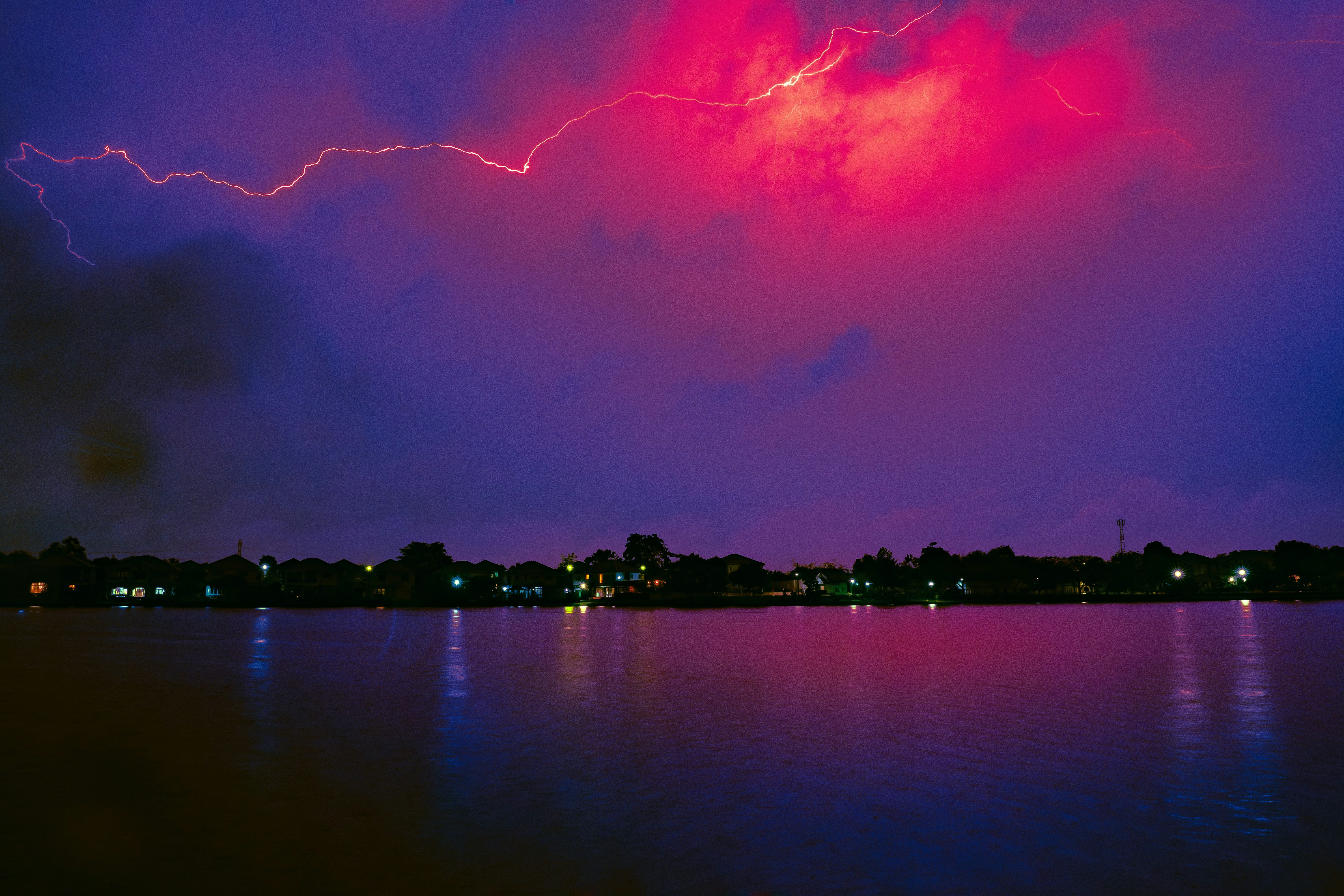
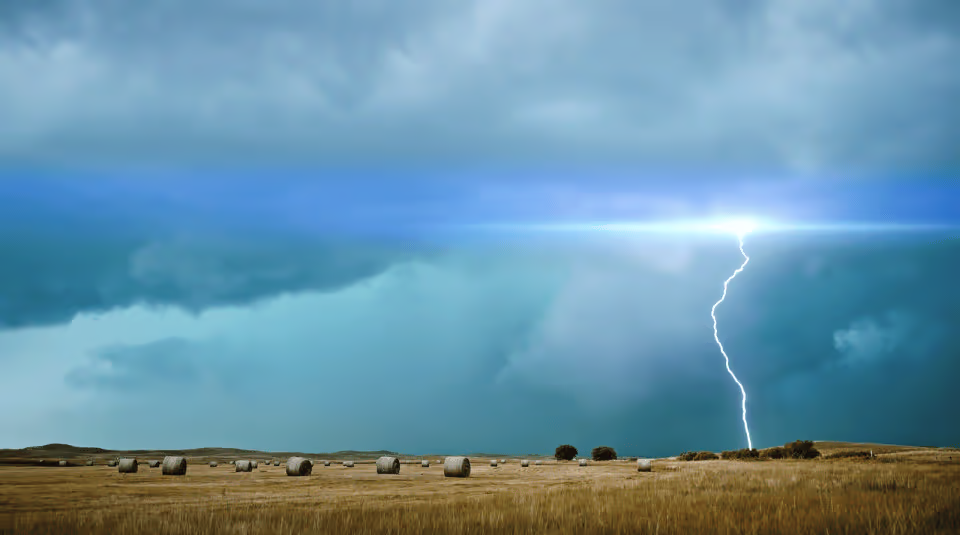
Last week, two new historical records were recognized. The first, and most impressive, was that the longest known lightning bolt to date has been recorded. 321.1 kilometers in distance, literally from one end of Oklahoma to the other. This lightning strike occurred in 2007, but the record has only now been recognized. This bolt also lasted 5.7 seconds, which would have been a new record if it weren't for the second one.
This second one is for the longest-lasting lightning bolt. Recorded in France in 2012, and with a duration of 7.74 seconds, it is the lightning bolt that has illuminated the sky for the longest time on record. Both bolts have led the World Meteorological Organization (WMO) to change the definition of lightning. Originally it was "...a series of electrical processes that take place in less than a second..." to "...a series of electrical processes that take place continuously...".
And lightning bolts like these are extremely rare. Although about 50 lightning strikes occur per second worldwide, the conditions required for someone to be able to record one are very unlikely. In fact, this is the great difficulty scientists face in studying this natural effect. And the same is true for studying lightning that forms in volcanoes. It is so difficult to record them properly that there is hardly any information on how they are formed.