Over the last few days, the La Vall d’Uixó wildfire has kept thousands of people on edge. Yesterday, during the fifth day of the fire, one of the most repeated terms by emergency teams and the media was THERMAL INVERSION, a phenomenon practically unknown to those unfamiliar with meteorology, which can have a decisive influence on the evolution of a fire.
What is a thermal inversion?
Under normal conditions, air temperature decreases as altitude increases. However, during a thermal inversion, the exact opposite occurs: a layer of warm air sits on top of a colder one, acting as a barrier that prevents the vertical circulation of air.
As a result, smoke, heat, and other pollutants remain trapped near the ground until atmospheric conditions change.
How does thermal inversion affect a wildfire?
Although a thermal inversion does not start a fire, it can significantly alter its behavior. Its main effects include:
- Keeping smoke concentrated at low altitudes, reducing visibility.
- Hindering the work of ground and air crews.
- Promoting the accumulation of heat near the ground.
- When the inversion disappears, the air begins to move again, and the fire can experience flare-ups or sudden changes in its behavior.
It was precisely this phenomenon that contributed to several flare-ups in the La Vall d’Uixó fire yesterday, forcing firefighting teams to maintain maximum vigilance.
Is it related to thunderstorms?
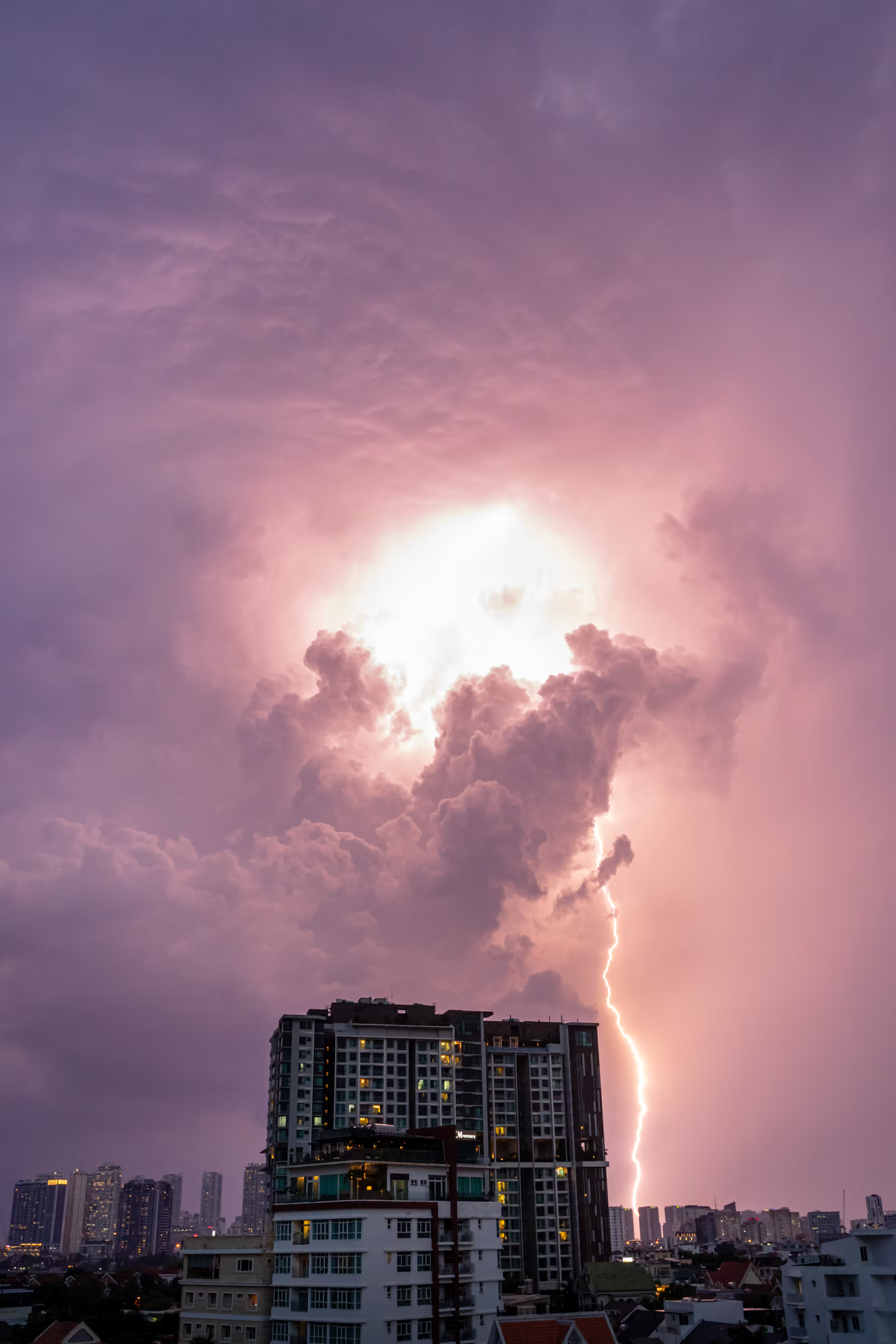
Yes, although indirectly. A thermal inversion does not produce lightning or cause a storm to have more electrical discharges on its own. However, it acts as a kind of “lid” that prevents the rise of hot air. As long as this barrier remains stable, the development of storms can be slowed down. When this layer finally breaks due to ground heating or the arrival of colder air at higher altitudes, the accumulated energy can be released very quickly, favoring intense storms with:
- strong updrafts,
- torrential rains,
- hail,
- very intense wind gusts,
- abundant electrical activity.
Therefore, meteorologists analyze thermal inversions as one of the many factors that help to understand the evolution of severe weather events.
A phenomenon that also affects air quality
Thermal inversions are also responsible for many pollution episodes in large cities.
By preventing air circulation, pollutants remain concentrated near the surface for hours or even days, worsening air quality and increasing health risks.
The importance of understanding meteorology
It is becoming increasingly clear that prevention against natural phenomena also involves understanding how the atmosphere works.
Heatwaves, severe storms, wildfires, or pollution episodes are part of a complex system in which small changes can have major consequences.
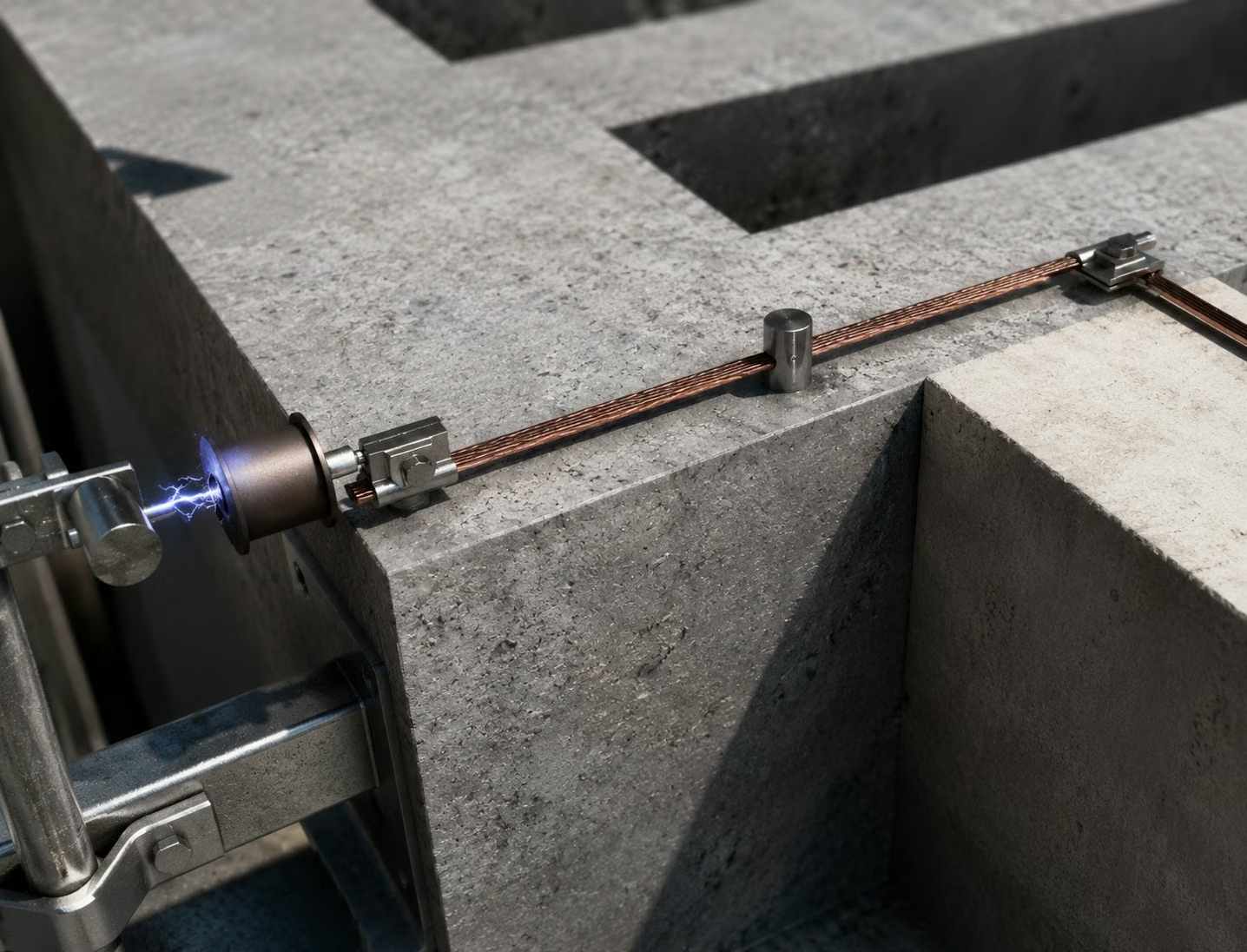
At Aiditec Systems, specializing in lightning protection, we know the importance of studying the behavior of the atmosphere to reduce risks and protect people and infrastructure against natural phenomena.
Finally, from Aiditec Systems, we want to extend our most sincere recognition to the firefighters, forest brigades, air crews, security forces and corps, emergency services, and volunteers who have been working tirelessly for days to control all the fires that have been ravaging our country in recent weeks. Their effort, professionalism, and commitment deserve the recognition of all of society.
We also send our best wishes to all the residents and affected people, who are experiencing days of enormous uncertainty and worry. We sincerely hope that the situation will be completely stabilized as soon as possible and that they can return to normality as soon as possible.